INSPECTION · SORTING · RECORDING

image

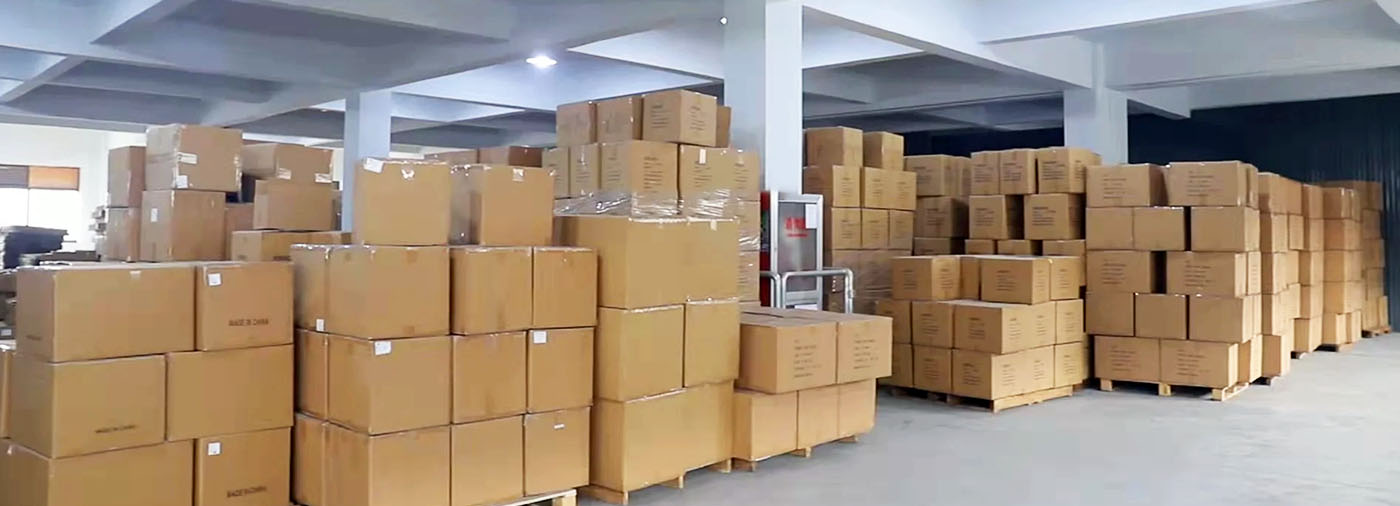
In the SWX Handbag warehouse, raw materials are inspected and then accepted according to purchase orders provided by customers and consignment invoices from suppliers. The materials are then sorted according to customer and product categories. Then all relative information for the raw materials is recorded into the warehouse's system, enabling informational consistency and high level organization. Each batch of raw materials features inputs such as production schedule, inspection reports, confirmed.
INCOMING QUALITY CONTROL 

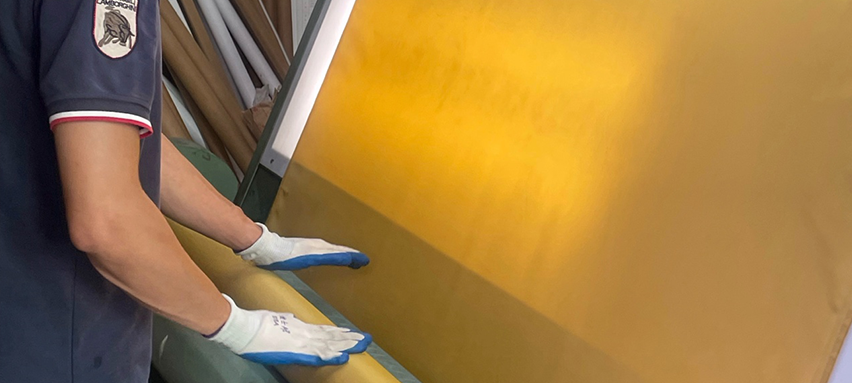
The Department of Incoming Quality Control (IQC) conducts thorough inspections on the raw materials using a fabric inspection, our company's Incoming inspection standards and confirmed PANTONE colors. This is to ensure that the supplied materials do not have such flaws as material mixing, inversion, pollution, scratches, drawn-thread, broken threads, burst-like cracks, aberrations, streaks.
The multi-functional fabric inspection machine is used to check the quality of various kinds of fabrics, thus ensuring there are no flaws, stains or snagged threads put into final production.

image
image

MATERIAL CUTTING 

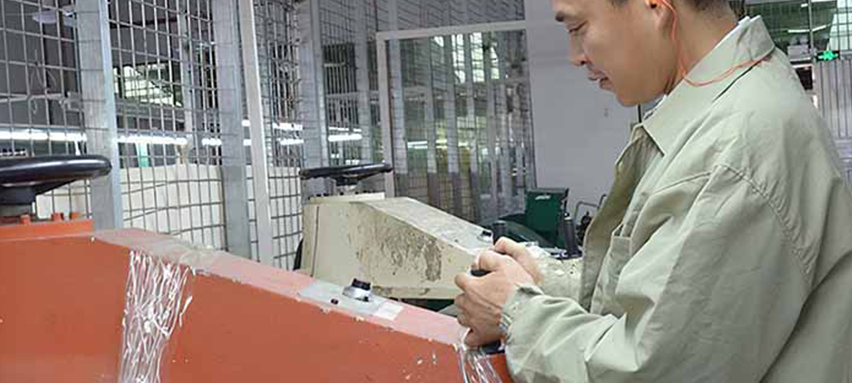
The cutting bed department is used for material stripping, rough shape cutting, general cutting, paper pattern and sample plate checking, confirmation for first samples, and sampling inspection. The inspection processes ensure off-cut levelness and the correctness of front and back facing, direction and pattern of the cuts, and the exclusiveness of flaws such as deformation, aberration, drawn yarn, and stains. The department is equipped with four column oil double cylinder press cutting machines, radial oil press cutting machines, large/small leather skiving machines, slitters, sanders, and vacuum pumps.

The radial oil press-cutting machineis used to cut synthetic materials, such as leather, rubber, canvas, nylon, cardboard etc.
(The radial oil press-cutting machine features several advantages. Firstly, it delivers high-efficiency operation, low failure rate, and is less noisy. Secondly, the lower stroke limit of the machine can be controlled by digital delay circuit and the working range of the swing arm can be adjusted using the hand wheel. Thirdly, the safe operation of the machine can be guaranteed by regular manual inspection and automatic oiling for the column.)

image
image

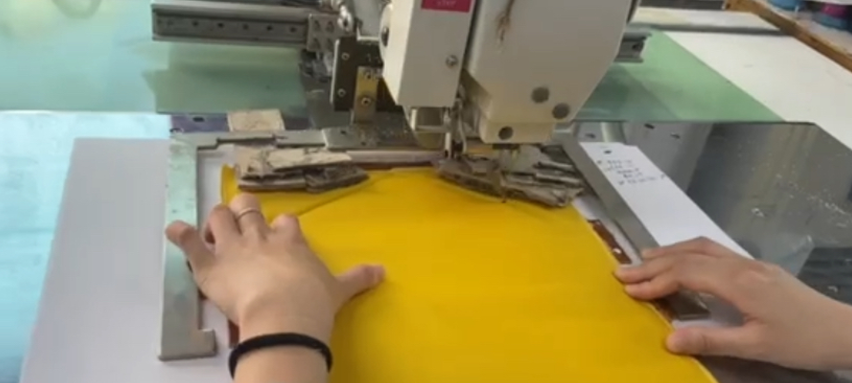
Then Sewing state, The juki pneumatic computer flat-bed sewing machine is mainly used to sew logos on handbags, equipment, zippers, watchband, gifts, travelling novelty, Velcro, leather belts, plastics, stationaries, and non-woven fabrics. (The machine features exquisite and beautiful stitching and low energy-consumption, which is demonstrated by its ability to output 10-20 times as many products as those processed by manual operation. It also only consumes 15% of the electricity compared with similar machines.)

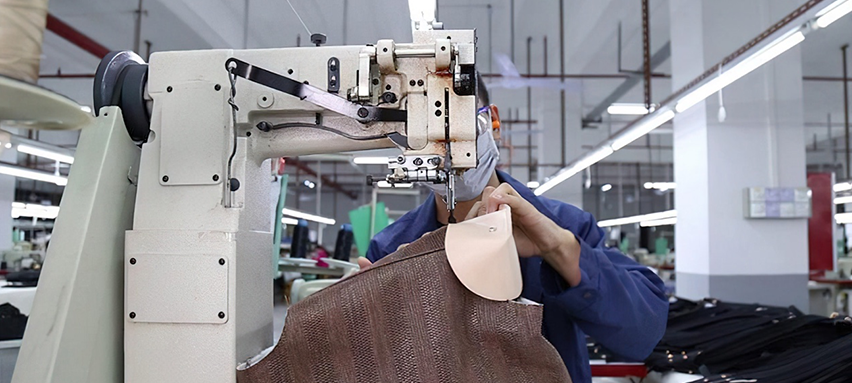
The pneumatic computer cylinder-bed sewing machine is mainly is used to stitch plastics, papers, handbags, Velcro, leather, non-woven fabrics and for blind stitching and leather edge-bindings.
And The auto-gluing seam beating and flattening machine is employed to conduct a series of process including edge separating, gluing, beating and flattening, and the computer on it can control the glue temperature and flow.

image
image

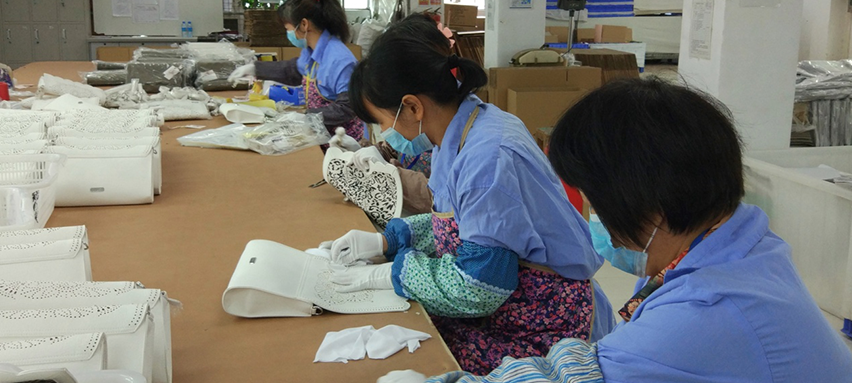
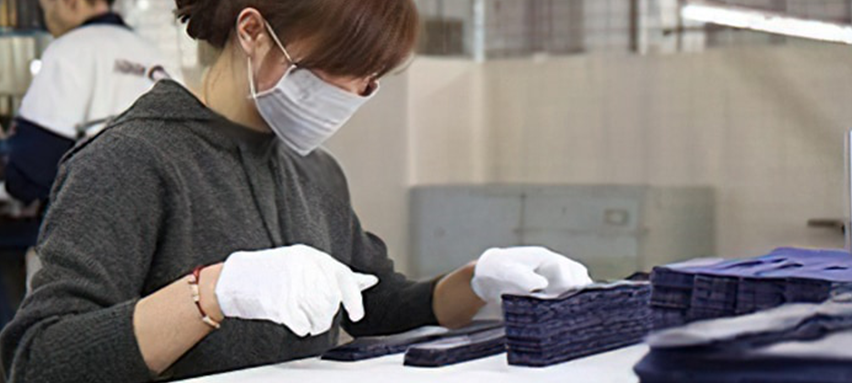
The quality control department is responsible for the inspection of all products and materials, including incoming material inspection, semi-finished product inspection, finished product inspection, packing inspection and shipping inspection.
All inspections are performed by the inspectors at the inspection station. The natural light or near natural light are required for the inspection environment, the viewing distance is 500-700mm.

PACKAGING WAREHOUSE

image
Incoming inspection
Check the appearance quality of raw materials (such as whether the material surface text/pattern, color, brightness quality is stable), process quality (such as the smoothness of the hardware products whether is deformed, and whether the fabric texture is stable), safety (such as whether the hardware products have sharp points and edges), functionality (such as load-bearing capacity of hardware, sewing thread tension, zipper normal opening and closing), and measure the size.
Semi-finished product inspection
The items that inspectors need to check include: Sewing line density; Zipper smoothness; Whether the model, position and assembly of hardware accessories are correct; Whether the glue bonding pressure, size and dryness meet the requirements; Whether the specification, size, direction and pattern of the cutted pieces are consistent with the sample; Whether the screen printing is missing or ghosting.
Finished product inspection
Before packaging, the finished product will undergo item-by-item inspection of the product process, quality details, origin, composition, price tag, internal and external packaging and moisture proof bags, etc.
Packing inspection
Check the name, color, price tag, carton size, case mark, case sticker, color mix and shipment quantity.
Outgoing inspection
Determine product packaging, appearance, safety, packing quantity, etc.

SWX Handbag Co., Ltd. is a professional manufacturer of bags, we undertake all kinds of processing services, provide customers with a large number of OEM and ODM samples to ensure that we can strictly meet your needs.


Contact Us

  • Johnny Yeung
  • Phone & Wechat: +86 139 23654 911
  • Email: johnny@kinhinghandbag.com
  • Address:  No. 196 Jie Fang Nan Road, Ping Shan Town,Huidong, HuiZhou City, Guangdong Province,China
  • Website: swxhandbag.com